


Artificial Intelligence promotional hype is the last place on Earth to go for intelligence.
Last week we had Sam Altman’s OpenAI releasing 722 mathematics papers, in one dump, to address 372 open mathematics problems.
Some wag called this the mathocalypse.
Sam Altman seemed to think that their mathematics papers must all be right.
How could artificial intelligence ever get anything wrong?
It is superhuman, is it not?
It is invincible, is it not?
It is infallible, is it not?
This is comedy.
A Silicon Valley firm, with no serious mathematical chops, decides to intrude on a public conversation in mathematics about 372 open problems.
Mathematician Mateus Araújo wrote a piece entitled: The death of mathematics:
Yesterday will be remembered as the day mathematics died. OpenAI posted the solution on hundreds of mathematical problems on a github repository, all generated by ChatGPT. Some have been formalized, some not, and the pdfs are uniformly unreadable, as except the Riemann one they haven’t been human edited. OpenAI doesn’t even claim all of them are correct, because of course nobody could have checked such a huge amount of material in such a short amount of time.
Mateus Araújo 7-Oct-2026, More Quantum
From one point of view, the doomsayers are right.
Competing on complexity is a dead end for mathematicians.
Nobody can possibly keep up with checking that volume of research material for correctness, and certainly not the team at OpenAI.
Do they win this game?
Definitively they win the game of duping the public that mathematics is a doddle, and we can safely replace all of the human mathematicians now.
This is plausible marketing spin when you need to persuade corporate customers to keep paying for expensive frontier models when open-source Chinese models have price-performance ratios between 30% and 90% cheaper per token.
There are two problems I see with this narrative:
No corporate I see wants to hire the next Albert Einstein
Large Language Models (LLM) are unreliable in the veracity of their ouputs
These are pragmatic issues that drive adoption.
Do you need much intelligence to be a corporate drone?
I spent many years working for large corporations. I rarely used intelligence to solve any problem the corporation cared about. It simply was not relevant. If you were to inadvertently apply your intelligence to a corporate problem, you would very soon become the problem. The issues are mostly internal politics.
Figure out how to make something happen without ruffling any feathers.
Draft an email and make it non-threatening. Avoid any clear articulation of what the real problem might be, but approach the solution by inviting participation.
This is not particularly complicated and does not require much intelligence.
Whenever it is clear that the corporation has a serious problem, which you judge to be caused by intransigent senior management, move on and get a real job.
This strategy works extremely well for any half-intelligent person.
It worked for Dario Amodei when he left OpenAI to found Anthropic because of his concerns over systems safety. Anthropic is now worth more than OpenAI
It will work for whomever leaves Anthropic because of concerns over safety.
Supposedly, the frontier labs are such hyper good at the mathematics of learning, that they have nothing to fear from a world full of mathematicians.
We know this is nonsense.
Why Mathematics Rules in AI
If there is any field of business that benefits the most from mathematics, and the real talents of mathematicians, it is artificial intelligence research. The models employed are examples of iterated function systems. In simple terms, they look like this:
Some readers may think this is cheating or trivializing a breakthrough technology. You can feel that way if you want to, but this is precisely what they look like to me.
For those who know their computer science, the above description was first given by Alonso Church in his general theory of the so-called lambda calculus.
The theory of general-purpose computing can be understood this way, and the deep learning models of contemporary LLM technology are this way. There are no ifs and buts, that is the underlying story, period. With a small tweak to the input and output stages, the same iterated application of mappings applies to quantum computing.
You can talk about the magic of engineering, but a mathematician will approach any serious study of model stability by reference to the iterated function theory.
In linear systems theory, such as that pioneered by Norbert Wiener in his 1950s theory of cybernetics the mappings are linear. There is a good stability theory for that.
With the exception of the orthodox description of quantum computers, all modern LLM systems are nonlinear iterated function systems, for which we do not presently have an agreed and general stability theory. We have ideas, but no theory.
What mathematicians know about iterated function systems is that they can easily generate chaotic behavior. This is a general feature of iterated maps and was the core observation of Mitchell Feigenbaum’s 1975 universality in transition to chaos theory.
Good mathematicians extend knowledge by working at the frontiers of what current methods can do in conquering problems of increased complexity within a field.
Great mathematicians create entirely new fields by synthesizing ideas from multiple sources to unify our understanding of complex sub-fields into a higher viewpoint.
Feigenbaum may have had a physics background but did some great mathematics.
He took disparate ideas that had been kicking around for nearly a century and showed how they could be applied to simplify our understanding of chaos.
Feigenbaum did great mathematics that started with computer experiments.
I think the same thing will happen with artificial intelligence.
On present form, I do not think it will happen in a frontier artificial intelligence lab.
The issue is the current management of the frontier labs.
They seem arrogant.
This is foolish when dealing with IFS.
The Death of the Scaling Law Hype
I accept that many readers will doubt my credentials to make such a judgment.
I will defer to an acknowledged expert Ilya Sutskever, who has called previous turns in the fate of the industry with impeccable precision.
Like many, he is best known because he used to work at OpenAI.
He does not work there anymore.
Q: Why did Ilya Sutskever leave OpenAI?
A: Ilya Sutskever left OpenAI in May 2024 following a massive philosophical divide over AI safety and a deeply fractured relationship with CEO Sam Altman.
Remember the on again off again firing of Sam Altman as CEO of OpenAI?
The debate then was the same one the industry is having today.
Are frontier labs trying to scale an immature and unsafe technology too fast?
Initially, Altman was out and Sutskever was one of board members responsible.
Then Altman was back and Sutskever was out.
This is the story of one laboratory, OpenAI, which seems to think it is the only place on Earth that will ever succeed at AI. In the course of maintaining this management fiction there is a rapidly revolving door of top talent, many of whom go on to seek funding for a new disruptive start-up. Sutskever founded Safe Superintelligence.
Here is their pitch:
We approach safety and capabilities in tandem, as technical problems to be solved through revolutionary engineering and scientific breakthroughs. We plan to advance capabilities as fast as possible while making sure our safety always remains ahead.
SSI Inc. Website 2024-2026
Does this isolated example mean anything?
Not really, except to say that fast as possible scaling is out and safety is now in.
This should not surprise anybody, as any casual experiment with LLM technology soon shows up the flaw in the glass: the robot clearly does not know what it does not know. This is the old problem of epistemology that has bothered philosophers for aeons.
It does not matter what the information technology, from Arithmetic Processing Units (APU), through disk drives and networking to databases. The fact that you may have data does not mean you have signal, it might just be noise. You need to address the problem, in a sound manner, or your technology will be judged to be immature.
Every nascent industry learns this important fact of life sooner or later.
Earlier, around the period that Sutskever left OpenAI, there was a giddy belief that a dot plot chart on model learning versus model size implied a universal law of scale improvement. Supposedly, you could brute-force improvement.
Silicon Valley is fond of selling an investment story with “Just do X”.
I can well recall the early days of vanilla compute clusters and this mantra:
Just scale out… the speed of each node in your cluster does not matter.
This business strategy worked fine for web servers, was kind of okay for web search, and still pretty good for databases with simple query patterns. It failed miserably in the world of Large Language Model (LLM) training, and now (possibly) on inference. The old mantra got thrown out, and NVIDIA stock soared.
This phase led to a classic Silicon Valley phenomenon:
There is a race on - whomever spends the most money first will win!
If you have plenty of cash to burn, this is not a terrible strategy, provided that you are the one that actually wins the race, and that winning did not depend on a new idea.
Around 2020, OpenAI published a very influential research paper called: Scaling Laws for Neural Language Models. This was an exploration of the relationship between the size of the model and the data set and the loss function measuring performance.
The result was graphs that look like this:
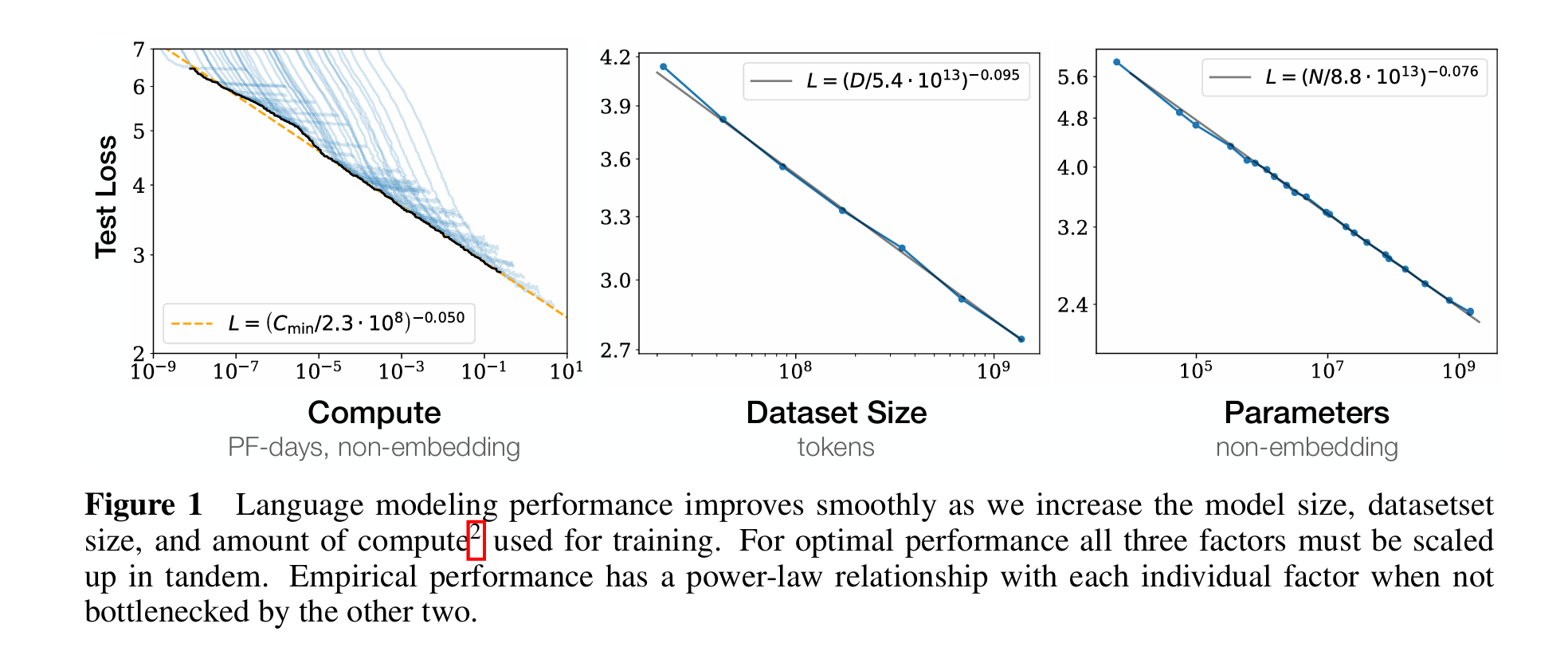
When the line descends, on moving to the right, it shows an increase in performance. In the chart above, this happens for three parameters: compute; size of the training dataset; and number of parameters used in the LLM model.
Statisticians are never surprised by a scaling law when fitting data.
The standard one for Gaussian statistics is that the standard error in the mean, for one dimension, will scale as one of the square-root of the sample size. Obvious, no?
In statistics, this leads to a logarithmic scaling law with a one-half slope.
A version of this scaling law even applies in quantum mechanics.
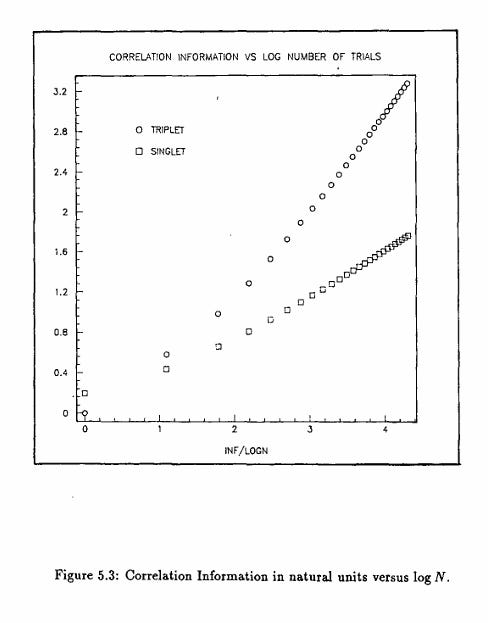
Superficially, if performance improves by expanding the data set, compute and model size then all you need to do is spend more money faster to grow each.
OpenAI, and its imitators, fully bought into this logic.
You Just Scale Up!
This is not an uncommon approach in large companies or large economies.
The way you win is to be bigger and faster than everybody else!
This is great if you are management for the enterprise, since management knows about money and can talk to investors about getting the most money quickest.
The problem with this approach was obvious to any statistician from the start. In that field, the design of experiments can affect statistical efficiency. You will not defeat the scaling law slope, which is set by the information dimension, but you can change the intercept of the straight line. This is the economically important criterion.
On a logarithmic chart, a unit change in the intercept is a geometric factor change in resource requirements. On a base 10 chart, one unit change is tenfold better.
If you make two-unit changes in the intercept you can do the task using 1/100th of the dataset size, and or compute and model size. This is what actually matters.
When the Chinese firm DeepSeek broke through with their Mixture of Experts models, they definitively showed that better algorithms, could shift the intercept of that law.

Surely this is cheating?
What is all this nonsense about algorithmic efficiency gains?
Those with modestly functional memories may recall the Cooley-Tukey FFT algorithm. This took a scaling law and radically bent it to convert the naive scaling from O(N^2) to O(N Log n) in the compute time taken to complete a Fourier transform.
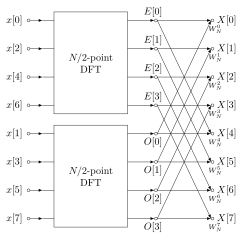
The idea that you just throw data at LLM training is exceptionally naive.
The real world has structure that can be compressed by clustering and the efficient modelling of structure via mathematics. Classical geometry was captured by five postulates of Euclid. You do not know all theorems in Euclidean geometry from knowing the postulates but can apply compute to derive those.
Structured systems of knowledge enable informational compression.
Hence the Mixture of Experts strategy of DeepSeek sought to partition the LLM model into mildly overlapping, but largely independent, expert models. If you look at how any large-scale human activity is organized, it is generally done in this manner.
There was nothing essentially new in the ideas of DeepSeek other than to apply clever engineering to address the teething issues that caused prior MoE models to fail.
Can you see the pattern emerging?
When intelligence is the task, intelligent people are useful to perform the task.
The human brain does actual Real General Intelligence (RGI) using 20 Watts of power in the space the size of your skull, and does the really hard part, the recognition of patterns in visual and auditory impulses without consciously thinking.
What is happening here is a common delusion about the power of computation.
Intelligent computation uses less computation in less space with less power.
This is the innovation that matters, and it is powered by AI researchers.
Those researchers are human, and they can now deploy AI LLMs to help model and code more efficient algorithms. There is no need for AGI.
RGI + LLM means continuous metric improvement on artificial intelligence.
Many investors seem to think that classic network economics will lead to a dominant player that has a lock on future intelligence. This is a confusion about intelligence.
Intelligence, when present, can adapt any tool to extend its reach.
This is not the same thing as data. You can have all the data in the world but not know what to do with it. You can have the best LLM in the world but have no real question to ask of it that would help progress your cause.
Certainly, you can imagine self-improving systems that reflect on themselves and make continuous improvement, which brings us back to the question of safety.
How do you know that the system will be stable under all inputs?
Humans, even when in severe environments, have a natural system of homeostasis. The physical organism has stability built into it. It is not infallible, but can correct errors through attention and remedies like withdrawal from risk and danger.
The mantra of Just Scale Up is now changed by the realities of the marketplace.
Some of the early proponents of the scaling law argument that drove the capex boom are now acknowledging that better ideas can materially improve models.
The human species knows this: that is why we continually revise our ideas.
Intelligence is not an endpoint: it is a continuous flow.
The Future looks (too) much like the Past
I well recall a period in corporate history where most hiring decisions were based on test scores to identify high level coding talent. That soon morphed into hiring based on fit, due to mismatch between testing scores and the team performance.
The talk out of many labs, morphed from ace scores on “humanity’s last exam” to the code phrase of “model alignment”, meaning will our models have “fit” to corporate.
Is the model likely to point out the real problem with our company?
If the answer is a resounding “No” then you have marketable model alignment.
Next comes the problem of competence.
The model produces sycophantic output and does a good job of positive spin on the conclusion of any deliberation. Great! Go write 722 papers on 372 open mathematics problems and the get the CEO to pitch them as if this was a real contribution!
Does anybody in the C-Suite have a clue about any of these problems?
Does it matter if you proactively stir up a hornet’s nest by teaching the people in this world who actually know something about those 372 problems to “Go suck eggs!”.
Do you see where this is headed?
Does anything about this picture look like the known trajectories and failure modes of large organizations chasing a big stack of cash with (frankly) delusional leadership?
It is all fine: the model is superintelligent.
Good thing it does not fly the corporate jet, or we are none of us getting on it.
What we are witnessing, I believe, is the good, the bad, and the ugly of an ongoing story of human intelligence, with all of its high points, low points and comedy.
I have seen this story play out before in high frequency trading.
Automation did revolutionize electronic trading, but there was a bundle of problems along the path from go to whoa. Some went “whoa” in that final way: bankruptcy.

If the label says “intelligent” then we can think about the system it becomes as intelligent, meaning it is not going to go do exceptionally stupid things.
If you are in the C-Suite, you might recall one or two occasions, in the grand sweep of human history, where Real General Intelligence went and did some stupid things.
I think we are now close to that point in the investment cycle.
Sam Altman does not impress me in decision making acumen.
Pissing off global mathematicians in a mathematically intensive field is not what I would call smart. Competent mathematicians work on solving complex problems according to their ability. Excellent mathematicians probe frontiers to frame and attack new problems. Stellar mathematicians tear up the rule book.
There is a popular misconception that all of mathematics is contained in what we have already and that the field progresses by simply solving all the problems.
This is mathematics as theorem proving and butterfly collecting.
This is not how mathematics develops in the large.
Formal systems theory is framed around proving results from given axioms. These are the presumptions, the assumed truths of the formal system. However, as Kurt Gödel showed with his incompleteness theorem there are provably correct statements in formal systems capable of encompassing arithmetic that are not provable within that formal system. Mathematics is like a snake that swallows its tail. There is always a pointer to new mathematics outside of that formal system.

Throughout history there have been mathematicians who changed the subject forever by seeing connections that were not previously seen or understood. This process can happen by many paths, but results in an extended formal system.
There is no complete mathematical formal system.
To draw a line around mathematics, to contain all of it, is not possible.
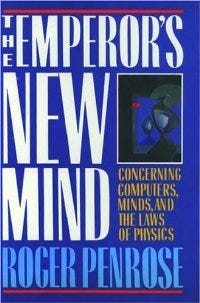
Perhaps human intelligence encompasses a slice of new mathematics we do not yet know. Perhaps, as Sir Roger Penrose has argued, it involves some physics, which accounts for some features of human thought that seem global.
This is a subtle point, but intuition is what enables mathematicians to create a new axiomatic system that is not simply a rearrangement of an existing one.
You do not derive axioms from axioms.
You do not prove a new system from an old system.
You extend an old system by stepping entirely outside of that system.
This is the difference between innovating within a genre and creating an entirely new genre. Humans can do that, and the result of that is what trained the LLM model!
There should be no concern that Real General Intelligence cannot feed and nurture an Artificial Intelligence to get better over time: at performance, safety and efficiency.
In this specific sense, the frontier labs are failing at their corporate mission.
The frontier labs are no longer trusted and that is what matters in commerce.
Since they are commercial entities, this is a real problem.
Research is the Answer
Once you step back from “A.I. Uber Alles” the unfolding picture becomes clearer.
For example, the startup Typesafe.ai just came out of a two-year stealth build of its Jev system for enabling safer and more efficient AI Automation of LLM-driven tasks. This system was launched about a month ago, on 15-Sep-2026, with this notice.
If you have not had sharp end exposure to automation in high-risk settings, like high frequency trading, or military systems, the value proposition may seem odd.
We are doing away with text-output to make a probabilistic state machine.
You what? What does that even mean? How is that an improvement?
What you see now is real engineering in action.
The way you mitigate risk in real systems that operate inside human reaction times is to quantize the actions and risk weight the confidence in which you take them.
In the case of trading, there are only three actions:
BUY: resulting in a long position
NEUTRAL: resulting in no position
SELL: resulting in a short position
You can have crazy chains of reasoning feeding such a system, but it keeps track of which actions are working and which are not working.
This is how epistemological risk is solved in practical real-world systems.
If you do not know what is going on, why persist in pretending that you do?
The LLM script: always give a confident answer even if you don’t know is stupid.
Continuing the standard script, the founder of Typesafe.ai is Diogo Almeida who was instrumental in the design of ChatGPT at OpenAI and left them two years ago with the intention of addressing hallucinations and other weaknesses of that system.
It will take some time for the community to evaluate the claims for Jev, but the system shows some promise, with two orders of magnitude price-performance improvement.
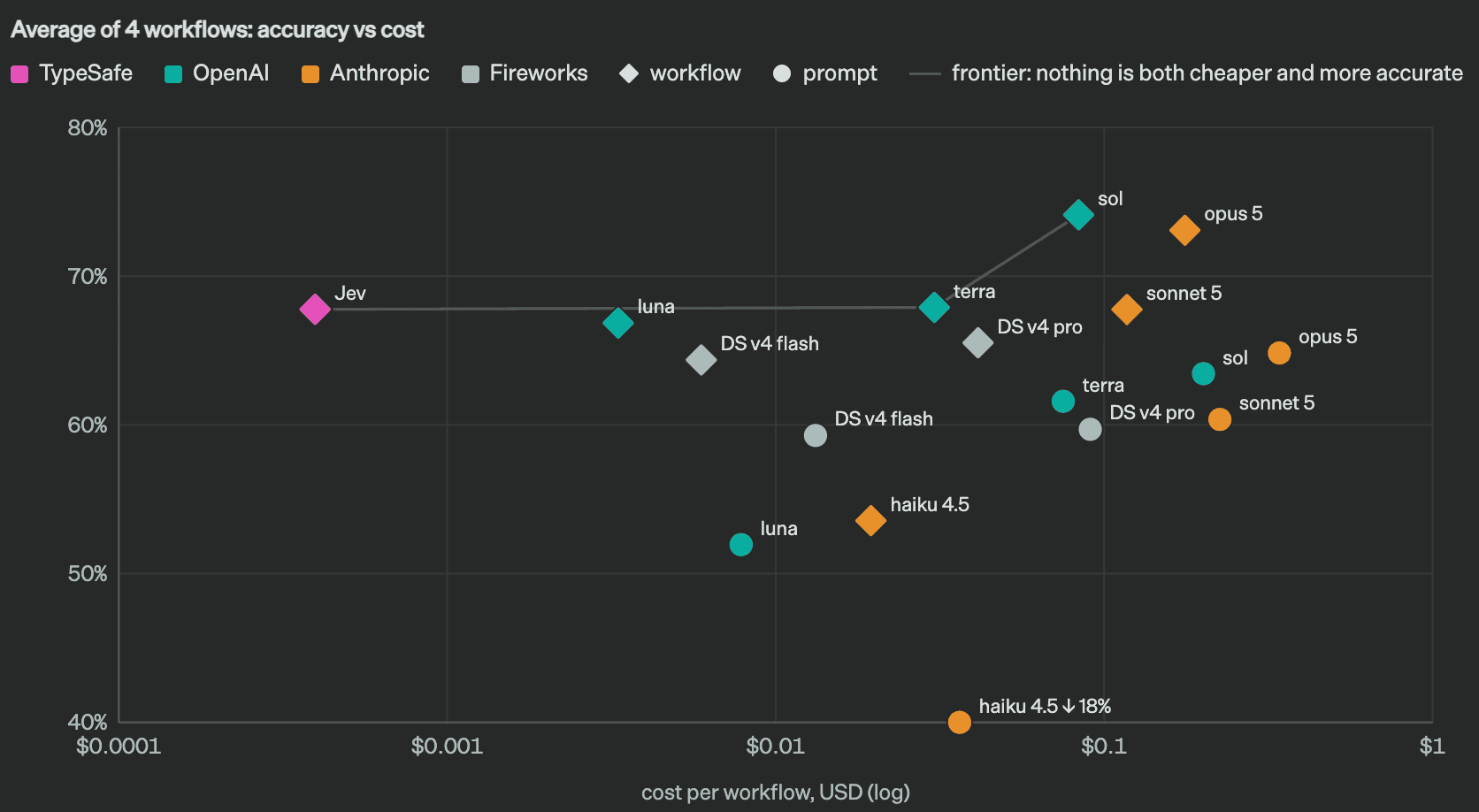
It is unclear if this system will make any impact on the market share of current leaders in the Artificial Intelligence stakes. The reason I mention this is two-fold:
Price-performance on task is what commercial buyers care about not scaling laws.
The decision to put dead-hand style controls on action is sound engineering.
There are situations, like driving or flight, where you always want some control action, but this has to be properly informed by reliable signals and not pure noise.
With Artificial Intelligence, it is fine for employees to go off like so many frogs in a sock concocting polished emails to pitch their case for a raise at bonus time.
Nobody will be aghast if the marketing community comes up with new ways to grab attention and spin snake oil to make a sale. Truth has never visited that floor.
Politicians will naturally embrace the ability of LLMs to make up stories and craft messages to sway voters in their social media feeds.
This is a small slice of what we all have to look forward to.
However, there does not seem to be any practical limit to the number and variety of models that could be trained. If we look at Real General Intelligence there are some seven billion flesh bots running around this planet consuming 140GW of power.
None of this really requires new power plants.
They run on caffeine and sugar.
The reality of AI models is that they will not go away, and they can seriously bother anybody with real work to get done, like the mathematics community proving their theorems, in between having Sam Altman stuff their feed with polished turds.
The real point of this stack is that the research frontier of AI will continue to change, and the problems are very clear. Real intelligence, you and me, is demanding on the high-risk proposition of letting any of this technology do something important.
This is a War of Competing Algorithms, and engineered frameworks that guarantee performance against risk criteria. We saw this movie before with control theory.
There is not any one company that dominates control engineering.
It is a general-purpose technology with large end markets, like automobiles, humanoid robots, aerospace and defense and industrial processes.
Shooting emails around is an industrial process of sorts, but not one that seems to have ever shown any material improvement in labor productivity.
What we won from the email innovation was a world of spam.
This is why I think the Killing Season for Over-Hyped Models is coming.
They are useful, but we need to get on with doing useful things.
The promise that our personal world may be taken over by robots who have decided to turn their hand to the Riemann Hypothesis will please nobody.
What they want is safe affordable AI that does not suck.
They also want to be free of Petty Napoleon types trying to eat their lunch.
Enough said…
Look out for a race to the bottom on pricing of commodity AI and a race to the top on system harnesses you can put around it to get useful work done.
That is the future I look forward to with advances like Typesafe.ai
The Emperor Sam has no Moat.