


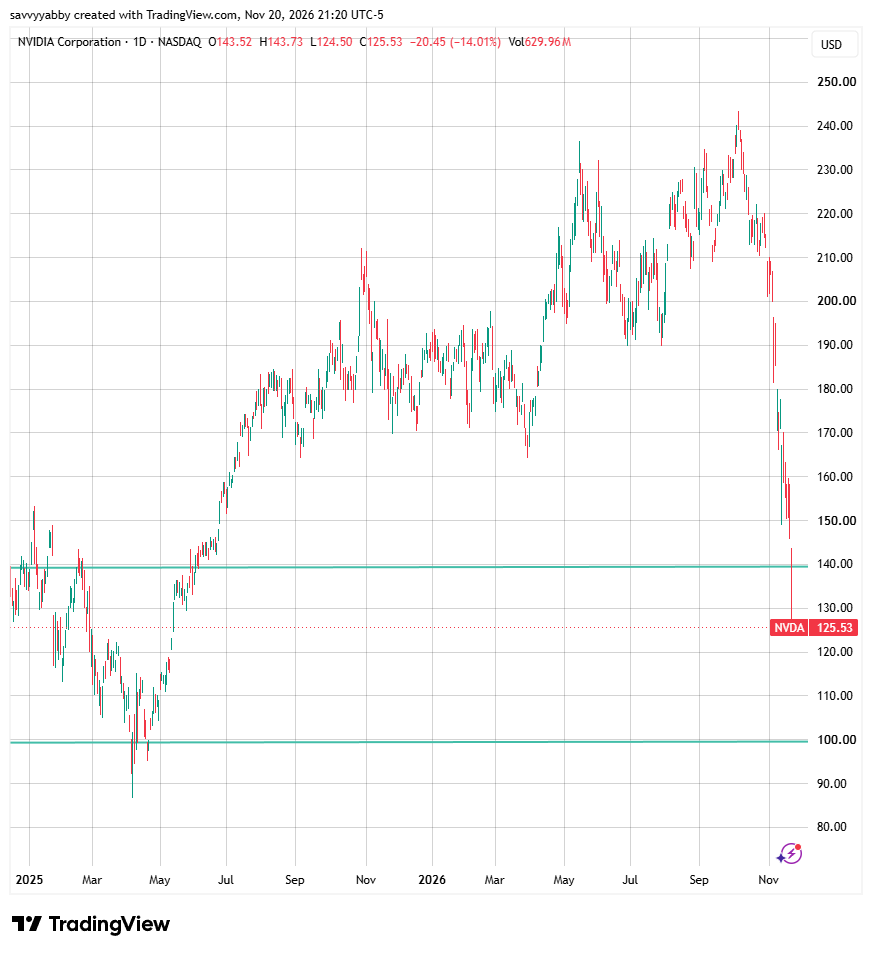
Of course, it was a cruel night for Nvidia on Wall Street.
Ten days ago we flagged a switch from Nvidia to Alphabet: The Future is spelt TPU.
Overnight, the stock punched through my low-ball target of $140 USD/share on its way to the next major support at around $100 USD/share.
At that level, it would be a buy not a sell.
I have yet to even update my model portfolio!
Meanwhile the mathematics community (home those billionaires who do it for fun) took another beating with the claim by Levent Alpoge, of Anthropic, that he had proven the Riemann Hypothesis. This is progress of an odd kind.

On the bright side, that looks like future employment for mathematicians. Having just raised around $100B USD, Anthropic can kick 250,000 mathematicians a dollar to read one page each and get back in a huddle to tell us if they believe the machine.
The robot did generate 17 million lines of code, which did compile.
Just for a joke, they call that proof system Lean.
It is a formal systems proof assistant, so it may be provably reliable as an assistant.
The purpose of the 250,000 mathematicians reading the proof is to see if they can nut out how you would verify that the Lean code implements the proof.
This is so boring only a plodder of a mathematician would pay attention.
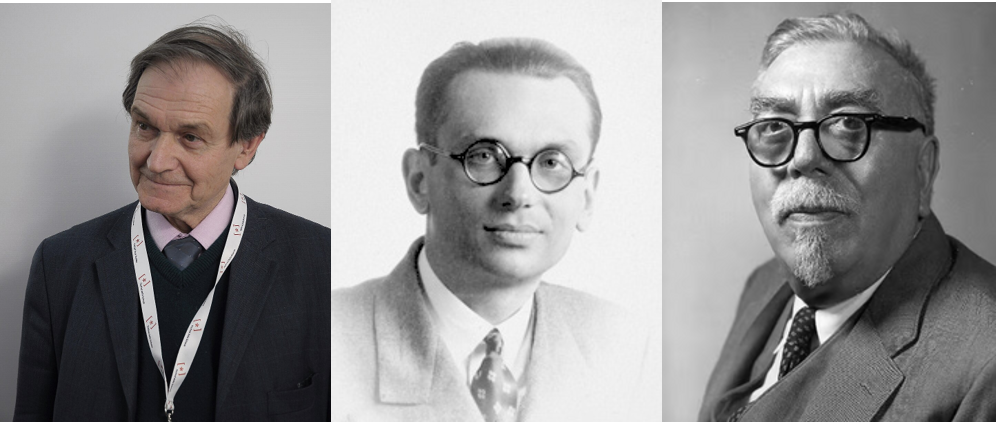
The issue with formal systems is that they are formal.
Understanding what is going on will not spring magically from a lean proof assistant. It just says that each step in your argument verifies within the system as correct.
This is no Gödel move of proving something you did not expect that permanently invalidated the notion that a formal systems approach could complete math.
This is not churlish behavior.
Formal systems are for people like mathematician David Hilbert.
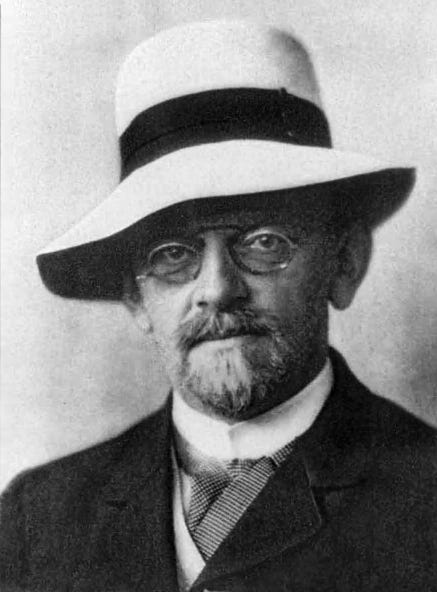
Kurt Gödel swatted away the Hilbert formalist program with his two incompleteness theorems, way back in 1931. John von Neumann paid attention. Bourbaki did not.
Real progress happens when we are surprised by a new unexpected result.
Taking 17 million lines of code to claim you have proven the Riemann Hypothesis is not such progress. The majority of mathematicians think it is true.
The problem to answer is this: Why is the Riemann Hypothesis true.
When I did my Classical Schrödinger Equation, way back in 1990, it was an unexpected result. The proof that it is true is simple. The proof of why it is true is simple also.
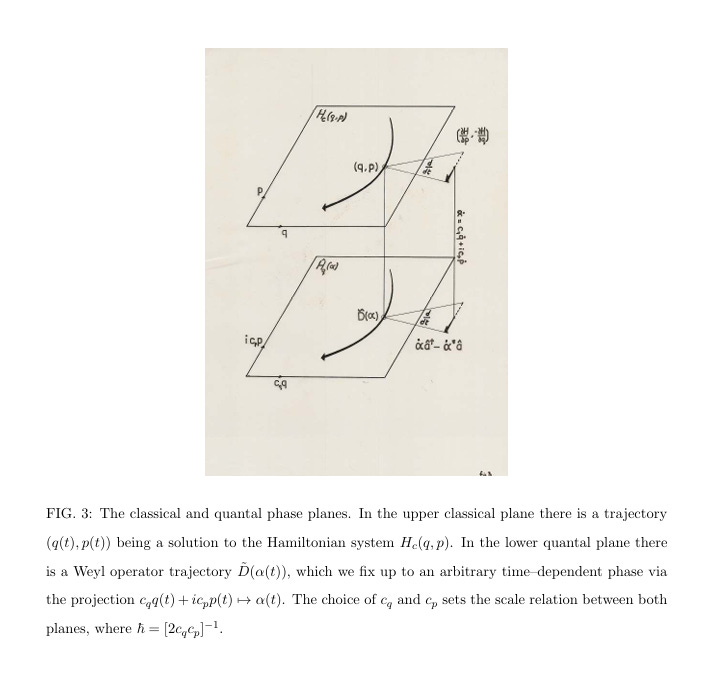
If you think (erroneously) that Classical Mechanics is contained within Quantum Mechanics, then the above result cannot possibly be true. However, it is true.
The proof takes three lines not seventeen million.
The result of that proof, is that you discover that the representation theory, in the sense of group theory, of dynamical systems is more subtle than first imagined.
In short, the reason to dwell on this personal example is to emphasize something that seems to have been entirely forgotten in both mathematics and physics.
The road to discovery is rarely straight but need not be complicated.
The best analogy I can come up with is that of a hiker in the mountains. Perhaps there is a hidden valley over yonder? You are unlikely to find it by bush bashing your way up the familiar valley you are already exploring. The best way to find the hidden valleys of science is to go scale nearby peaks and see what you can see from on top of them.
I did that thirty years ago.
When science smartens up enough, I will publish the results. This will happen, and most likely soon, because nobody likes being slapped with 17m lines of code.
Soon enough, people will say: “Give me a proof a child could understand!”
There is one in the diagram above, but few bothered to look at the picture.
One Strange Juncture
I think we are now closer to the end of this comedy than the start of it.
Artificial Intelligence is good and I use it.
However, I slap it around a lot when it is wrong.
Artificial Intelligence is wrong a lot of the time.
Sound physical intuition and good mathematical taste can catch most bugs before they have spun out of control. This means humanity is fine, in the long run.
In the short run we must deal with a mental disease called Bourbaki.
This is the prevailing idea that every idea in mathematics and physics can be proved by working within a current system of axioms, the prior assumptions of theory.
Contrary to popular belief, you do not derive axioms.
The axioms are the founding assumptions of your formal system.
When somebody does new mathematics, like I did in the diagram above, they identify new axioms. These are assumptions that were not considered before.
This is all a bit shocking to those who always ask: “Will this be on the test?”
The point is that new axiomatic systems are never on the existing test.
Presently, we have a society that is being confronted with the idea that mathematics will soon be done, because all the problems on the current set of tests are solved.
That is not the case.
We can see that because Microsoft cannot make the Copy Button work.
The Current Software Engineering Crisis
The practical upshot of this widespread formal system misunderstanding is that many previously reliable software systems are now becoming very unreliable.
This process started about fifteen years with the perpetual beta trend:
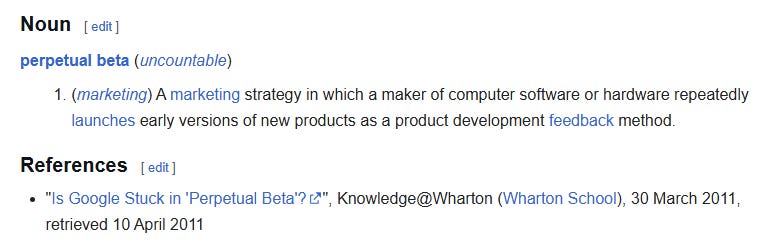
The idea was that you could win users to your software by constantly launching new and exciting features, perhaps without any serious testing of them.
This worked okay for twenty years.
However, now coding automation has led to an escalation of unpredictable bugs and dependencies that are becoming ever more frustrating to human users.
I am sure you can name many.
Here are a few from me:
My iPhone autocomplete started randomly inserting French characters.
Windows 11 stopped saving files while pretending it had.
The copy button no longer works on my CoPilot
These are all relatively trivial, but involve rekeying, lost work, or the frustrating need to constantly debug application software that updates itself without any warning.
This has been happening gradually, over decades, but the pace has accelerated.
Increasingly, I use offline systems that are safe from random updates so I can get my work done. It is not bad enough to reject major systems, but software quality is now visibly declining at an accelerating rate. Countermeasures will be taken.
I come from a quantitative trading and defense background.
If systems are brittle, unreliable, and prone to constant failure they get ripped out.
High risk areas cannot tolerate faulty software.
Frontier labs daily claim a new prize scalp in fields like mathematics, claim they will shortly cure cancer, but cannot make a copy button work.
We have seen this situation before in the software industry.
The solution is ever and always the same.

The firing gets brutal. The teams get gutted. Heads do roll.
We are that time now.
The Copy Button on CoPilot does not work!
Cue mass layoffs for incompetence.
I need say nothing.
It will happen.