


Whenever a big change happens, I take time out to think about the opportunity.
I have had three careers and started five companies in my time.
The 2026 Budget changes to tax and negative gearing do not scare me.
I have seen far worse economic challenges in my 63 years on the planet.
What matters is knowing how it will affect the landscape.
Here is my take:
Directly, it removes investor competition for housing with owner occupiers. Directly, the abolition of the CGT discount shifts the horizon to long-term investing. Directly the realization that deferred capital gains are better will refocus minds. The idea of paying advisers to lose you money is dead.
Australia has had three decades of easy money credit boom, and it shows.
Now we can hear the public screams of those drowning naked.
Nobody forced any investor to negatively gear overvalued real estate.
The effect of removing the public subsidy of PAYG deductible debt for investors, and not first home buyers, is to take them out of the market. They now have to pay the real cost of finance for those properties. They realize it makes no sense.
Any competent financial advisor could have told them that.
Now they get to find out for themselves.
For those in Australia now bleating clock this:
In the USA, you cannot deduct the principal portion of your mortgage payments. However, you can deduct the mortgage interest on your primary or secondary residence. This is done by itemizing deductions on your federal income tax return rather than taking the standard deduction.
Like here, before the budget changes, you can deduct interest against rental income for an investment property. Where were the advocates for a policy of helping our home buyers by making the interest on their principal residence deductible?
Nowhere to be seen.
There are no Australian advocates for deductible first mortgages I can see.
Cue massive wailing and gnashing of teeth when the privileged negative gearing set got their punch bowl taken away. Already, property values are normalizing.
Falling real estate values in Australia are necessary to balance this market.
I own a residence too, and mine will fall in value also. Since I judged real estate to be overvalued in 2020, when I bought my present place, I live very modestly.
This correction has been three decades in the making.
It is here now.
My take on Entrepreneurship
If you believe the hype for the Venture Capital community, Entrepreneurship is all about twenty-something world changers with a bright idea to make a trillion.
If there had been a venture capital industry in Australia, in 1983, during the depths of the Volcker double-dip recession when interest rates were 18%, then 20-year-old me might have had a go. I could program, owned a computer, but was crap at designing video games. I was good at physics and liked to tinker. It was not crazy, at that time, for a young person to think of designing or inventing something.
For me, I had considered the scientific instruments industry, where there was quite the cluster of activity in Melbourne, with Varian and Vision Systems Laboratories.
I was fortunate to do my honors in the Research School of Physical Sciences at the Australian National University (ANU) in a laser lab where my supervisor got me to assemble and tune a laser wavemeter of his design. This was great stuff.
Once I had graduated, in 1984, I looked for jobs and was offered one in the laser lab at Telstra Research Laboratories (then Telecom), in Clayton, Melbourne. I was a very good student, and got the job, but turned it down. I wanted to do a PhD, and I had decided that it was best to go overseas to gain some international experience.
I duly won a scholarship to do a PhD.
As a condition of the scholarship, I could choose to go anywhere in the UK. Normally, it is competitive, but I got the scholarship, so any University in the UK would accept my application, as a condition of the British Council program.
I chose to go to the University of Bristol to do theoretical physics.
I am glad I did, as my advisor Prof. John Hannay was the quintessential eclectic and innovative Brit. He gave me a lot of confidence and taught me to think for myself.
I never had any trouble generating ideas, but John showed that the emphasis should always lie on following your nose on the most promising ideas, even if painful.
I contend that this is most important lesson of entrepreneurship.
You need to persist on those things that make a difference and junk all else.
Notice that this is not good advice for life in a run-of-the-mill job.
In a regular job, you do what you are asked even if it makes no difference.
I was always stubborn about doing anything that made no sense to me.
The PhD training taught me to be stubborn with myself.
Do, think, and try at what will make a difference if you solve the problem.
There I used the word “problem” which is common to R&D and entrepreneurship.
In my view, entrepreneurship is very simple:
Solve a real-world problem for your customers that delivers value to them.
Some folks throw in “change the world” but if that was my sole focus I would have stayed on doing research in theoretical physics.
If you want to seriously change the world advance theoretical physics.
You will have a much greater effect on future technology if you do that.
For me, entrepreneurship in business has always been more modest than any of the things that I have worked on in theoretical physics.
For what it is worth, I decided to switch from a life in academic research because I worked out that my kind of theoretical research needed almost no money.
Why battle for funding when you could get a real job?
Now that I am safely out of corporate life, I can happily report that no meeting was ever wasted time for me, no matter how boring. I can do calculus in my head.
With an attitude like that entrepreneurship is a natural for me.
Fake everything that does not matter until you solve the problem.
Fake nothing that does matter for your customer.
There is not much more to it than that.
Why is Australia weak in Technology?
Finally, for what it is worth, because it is highly relevant to the Australian economy of today, I am glad I did not take that job at the Telstra labs in Clayton. It lasted a few more years, and they shut it down to save money. Later Telstra bought out OTC. I visited their Sydney office around 1992, when they were being merged with Telstra to rationalize the business. They had a leading fiber optics lab. That got shut down right before the global boom in fiber optic communications. Later again, much later, I had the good fortune to interact with the Sydney arm of NICTA, a national facility which was leading Australian research in Artificial Intelligence. It was shut down in 2016.
For reference, 2016 was the breakthrough year for AI. That NICTA laboratory rated number five globally in the year it was shut down. Then it disappeared.
Who advocated for NICTA to get shut down?
The Australian Venture Capital community.
Enough said on this repeating theme of Australian R&D. Visionary folks set up the lab and make it world class. Short sighted bean counters shut them down.
Rinse and repeat ad infinitum.
Now the bean counters of this land want to shut down the Australian Synchrotron.
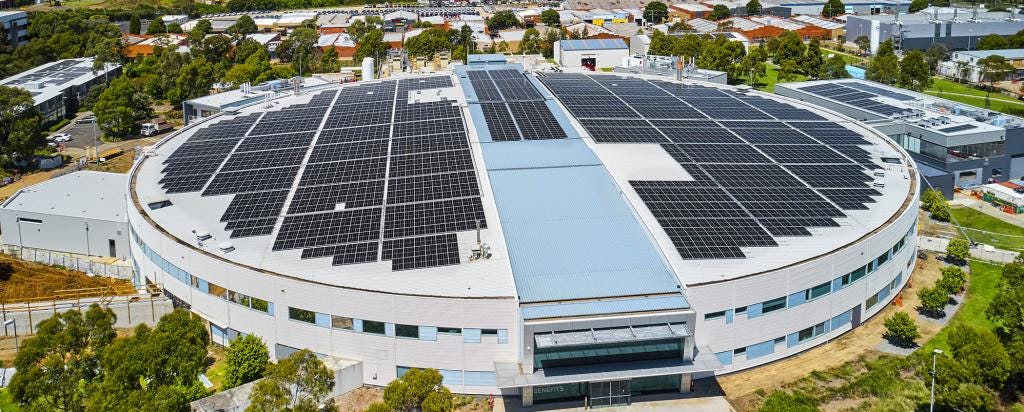
Hopefully, this facility will not die, and I can use it to test some ideas of mine.
If this facility does die, I will go to Japan.
Japan is not chock full of science and engineering imbeciles, like Australia is today.
The Ideal Business Opportunity
There is no general rule but there is a standard shape to attractive opportunity.
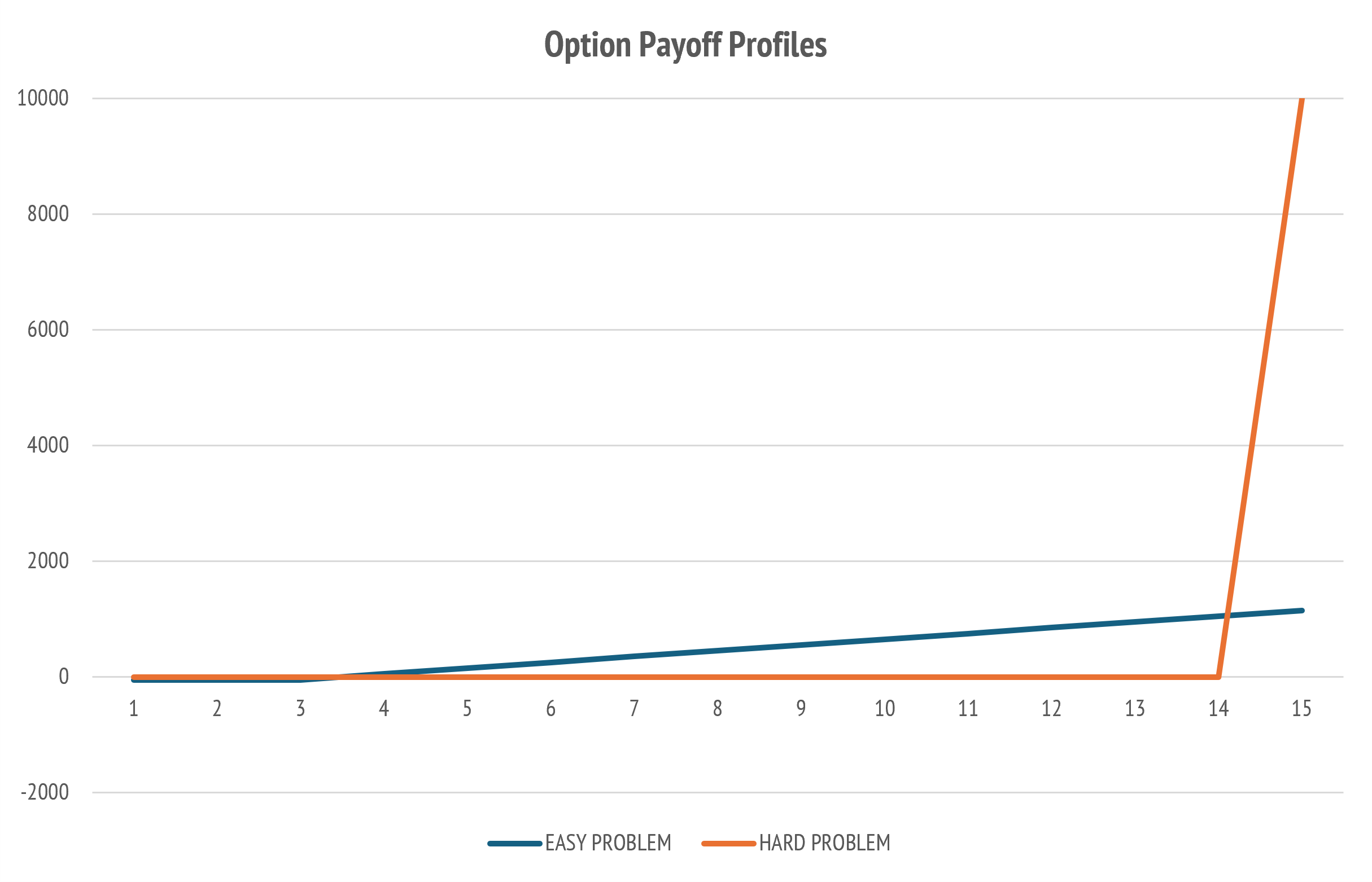
For any opportunity to be real, there must be some barrier to realize the payoff. Ideas that anybody can do will attract a lot of competition, which diminishes returns.
However, not every problem you may want to work on has a positive payoff.
Somebody has to be interested to pay you for the product or service and so you must deliver some value for them. Your individual fit for opportunity depends on you.
I am not you so I do not know where your best fit would be.
However, I can say that if it costs nothing, in time, money or thinking power to solve the problem you have in mind it is not likely to be a durable business opportunity.
You also have to contend with market preferences.
You may actually have an idea for a superior product or service that would genuinely offer the customer better value and a more positive experience.
More than once I have faced the problem of entrenched market preferences.
There has to be some way to persuade the customer to try and buy your product.
Consumerism is now so rampant that many poor products find a market.
This can be down to the simple power of advertising and marketing budgets.
I try to avoid anything like that because I think it is losing game.
Shoving aside the poorer contenders, in a crowded marketplace, is expensive.
Take a look at major consumer products markets in the age of social media. There are all kinds of indifferent products that are heavily marketed and widely bought.
Google and Meta have this business sewn up. They count the marketing dollars that flood into any segment with low barriers to entry, that demands marketing spend.
Returning to the option payoff diagram there are shallow and steep payoffs. The more certain the payoff the closer it is in time, but you may spend more dollars on it. The steeper the payoff curve, the more distant it is likely to be in time.
This may seem counterintuitive, but many of the best opportunities take longer to ramp but cost less in dollars. They cost more in the time you spend on them.
Human impatience is your best friend in delivering fat opportunity.
These types of problems involve solving the more complex problems which are more difficult for people to tackle because they may involve more than one puzzle piece.
The favorite problem type I work on has several puzzle pieces, where each must fit together, and each sub-problem looks impossible to most people.
I love to work on impossible problems.
This is not as foolish as it sounds, as most impossible problems are possible problems that require some patient thinking to address while the world spins about you.
Venture Capital will not touch people like me which is great for me.
If you identify possible impossible problems early you are likely to win.
Even before I had entered the business world, I had solved one problem that was widely considered impossible. This was an invaluable experience for me.
The question of entrepreneurship comes down to your choice of problem.
If you note carefully the trajectory of one Elon Musk, you will note that he has no fear of impossible problems. Mostly, he does not solve them, he solves another one.
However, you have to cut him the slack that he might solve a really big problem.
This is why I put two option payoff profiles on the diagram.
The Ideal Business Opportunity lets you work on two problems at once.
The first problem is to get a business running, the second problem is to scale.
You might spend a decent amount of cashflow to get into a business, and smaller amounts of money, mostly thinking, on figuring out how to scale it.
That is as generic as I can be without talking about a specific opportunity.
The Problem of Getting into Business
That is all very well, but how can one get into business?
If you are in business, you already know how, and you probably had no need of any abstract picture like the one I described. You just opened your doors.
The vast majority of professional services businesses are like this. You develop some marketable skills, get to know prospective clients, and put up a shingle.
There you are in business!
The same is true of trades, and perhaps more so.
Once you have your ticket for a trade you can be in business.
The problem only arises when there is not a direct line between your best skill set and the business opportunity you seek to harvest. This seems like a non-problem to many who have not faced the challenges of supporting infrastructure for your business.
Let me give a concrete example from my own career.
I left physics research in the mid-1990s as there was a dearth of funding. I realized that I could do my research with a pencil, but I needed to eat, and sleep some.
Like many of that era I went into finance, where I could make good money. The work was easy for me, and I was very well paid. There were lots of boring meetings, but I can smile, talk, and do calculus in my head, without blinking, or raising a sweat.
This was perfect for me until I decided I wanted my own finance business.
Since my specialty was quantitative finance, I needed lots of data, to do my job, which can be expensive in money to buy, and time to clean up and analyze.
I am not bleating; this is a standard problem for quantitative finance people.
When you have this type of business opportunity in mind, you will have to plan ahead and put in place the pieces you need, in a legal way, and form the capital stock.
The problem of forming the capital stock is a key one in entrepreneurship.
It is easy to be superficial about this challenge, which constantly morphs and changes.
Windows of opportunity arise where the capital stock requirement is lower.
One might also find that financial capital can readily substitute for capital stock.
You can raise money from investors and buy whatever you need when you need it.
This is the standard script for Venture Finance. Go in with a great pitch, come out of the meeting with a commitment to fund your venture with other people’s money.
There is nothing wrong with this approach, provided you have the right idea.
For students of Venture Capital, the key thing to understand is that the right idea is most likely a fashionable idea into which a lot of VC money is now flowing.
The way to win that game is to work on yourself as the entrepreneur.
This is the “sell me a pencil” test. If you work on yourself, you can likely sell the pitch that you are the one who can take a fashionable idea and make a big business.
This works for the right kind of person and can be very lucrative.
If you are anything like me, you probably do not find the idea attractive.
It is not that it is a bad idea; it is just not your idea.
This is an okay way to be also but requires a different approach.
If you are not going to raise a lot of money from investors in the business, you might find the equivalent kicker from clients. This works very well for professionals.
The best form of finance for any business is paying customers.
If you have developed a good reputation in your line of work, you can well start a business in that line of work by getting your current customers to follow you.
This is the best approach I know in financial services businesses.
If you really want to succeed, in the most reliable way possible, within the financial services industry, then hone your skills at a large, respected firm, and leave.
This is what I did with my financial services firm Jevons Global.
It is the sensible low risk way to get into a professional services business. This path is not a sure-fire win but is a proven and reliable way forward for most people.
The best advice I have come across in the mid-career entrepreneurship area is that from the Kauffman Foundation, in Kansas City, KS USA.
Since I went to school in Kansas City, in the late 1960s, I have a soft spot for KCK.
Ewing Marion Kauffman was a successful mid-West entrepreneur who gave back to many humanitarian causes, including the demystification of business formation.
The foundation he established has done much to demythologize business formation by pointing out that it is mostly mid-career folks who form them. Provided those are in areas they understand, they are more likely to succeed, due to experience.
The Valley myth of the twenty-something entrepreneur works for them.
If you analyze it carefully, the real business is fifty and sixty something VC partners, presented with a conga line of hopefuls, just like the Hollywood studio business.
It is not that it cannot work for you, but is unlikely to work for most.
If you like the mythology, then work on yourself to be pitch perfect.
It is an acting game and should be treated as such.
For guidance on real engineering entrepreneurship go to Shenzhen.
Failing that, figure out a way to build capital, to start your own show.
The Capital Accumulation Circuit
I am a mathematician, so my view of capitalism is very simple.
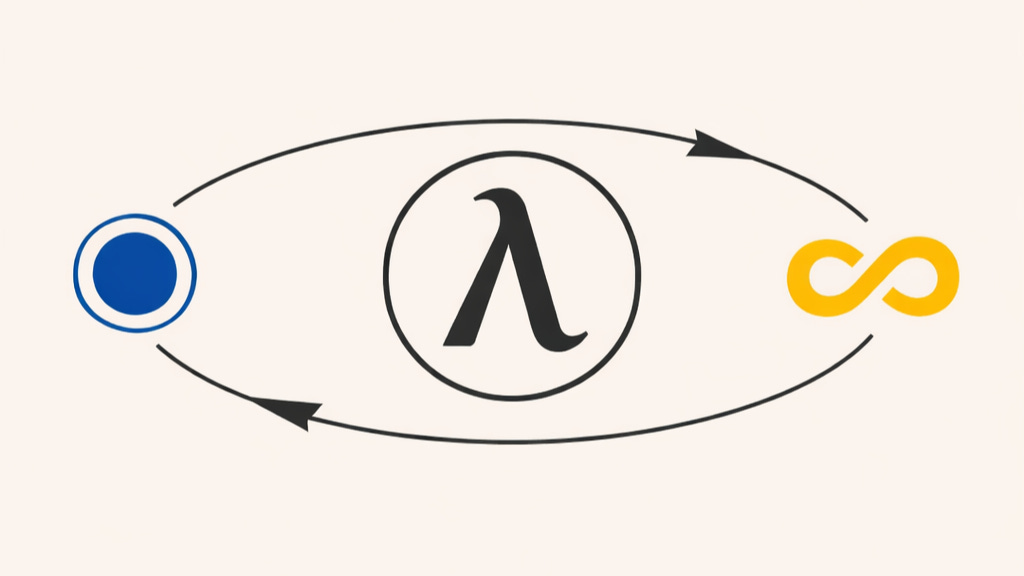
You go from nothing to an idea, which is an infinite rate of return. There are losses when you convert that idea to cash, but the goal is to rinse and repeat the cycle.
What matters most is your conversion ratio on capital employed.
Long ago, some idiot named Benjamin Franklin, decided that mathematics was way too valuable to be protected by copyright or patents.
Ever since Ben Franklin, all mathematicians have worked for a living.
This is not all bad, some of those very boring meetings in finance come with drinks!
Seriously though, it is your ability to convert starting capital to ending capital that matters most for successful business, and you must work on the conversion ratio.
Note that capitalism, as I have described it, does involve work. We are not talking about extracting rents from passive activity. That is a very big area of activity.
In Australia, there very few genuine capitalists, mostly they are rentiers.
You can tell this very easily by looking at the productivity data.
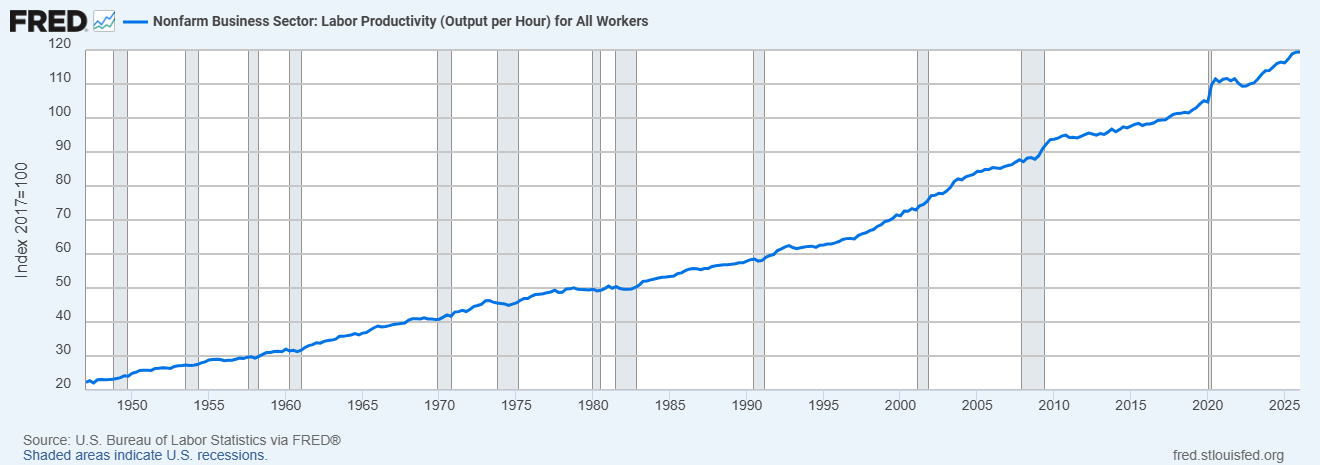
US Productivity Growth has been pretty reasonable over time. You can argue about who shared in the proceeds of that growth, but the facts are real. It is not simply a taxation or labor cost story. It is mostly a capital stock story.
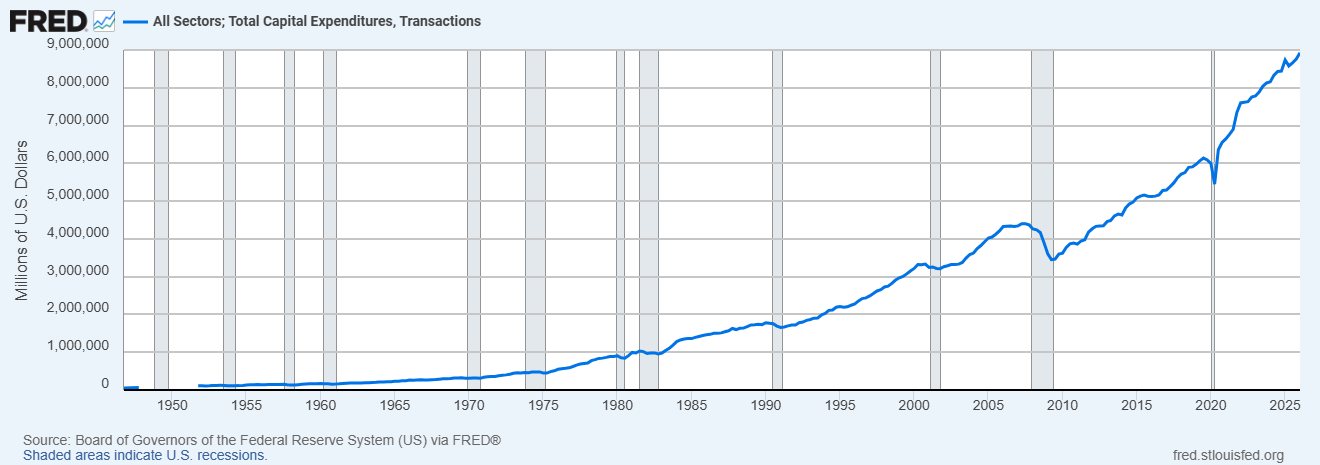
The capital stock is that magic piece that completes other factors of production like land, labor, energy and other material commodities. Done right, it adds value.
Australia is a very sorry tale by comparison.
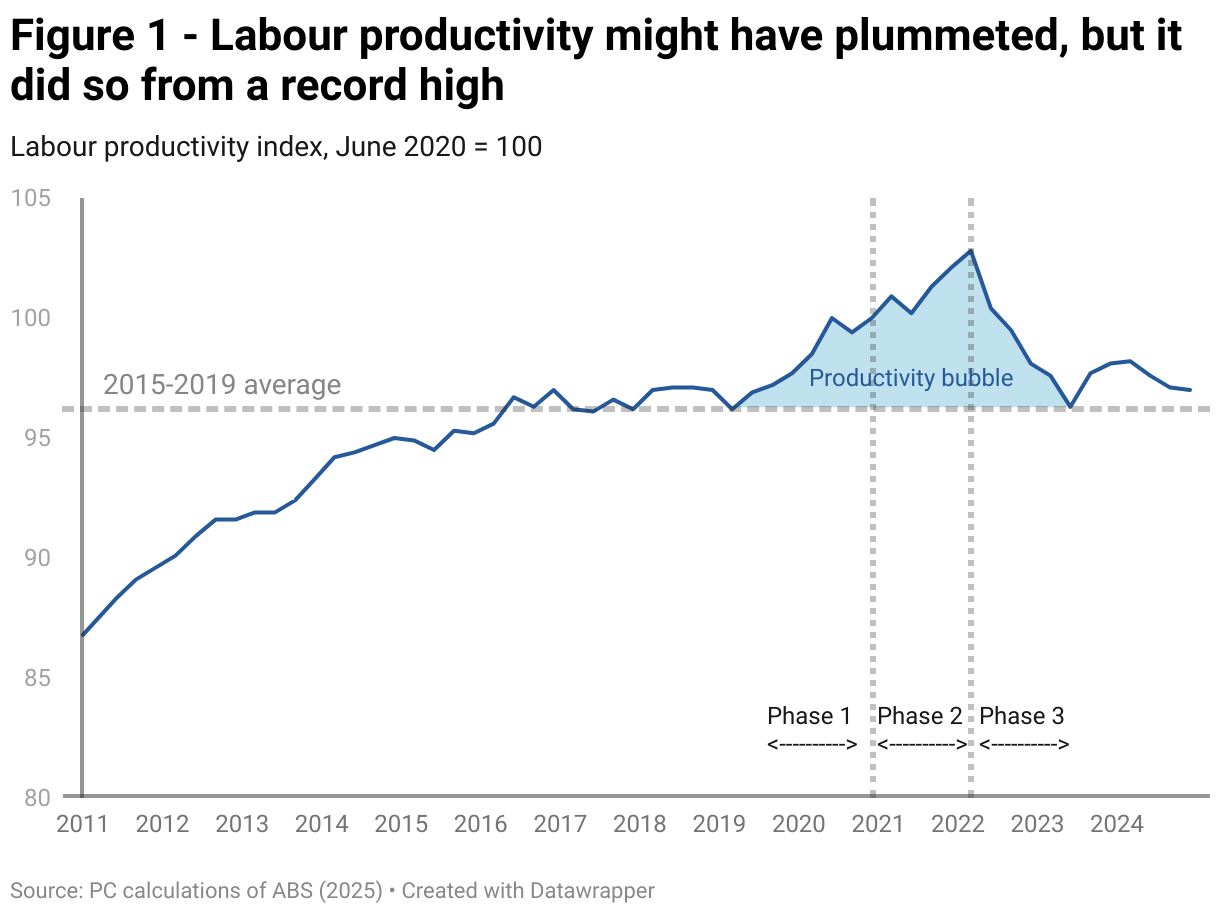
There are some who blame this on the labor market. This has something to do with it, but you will not materially lift labor productivity without matching capital stock.
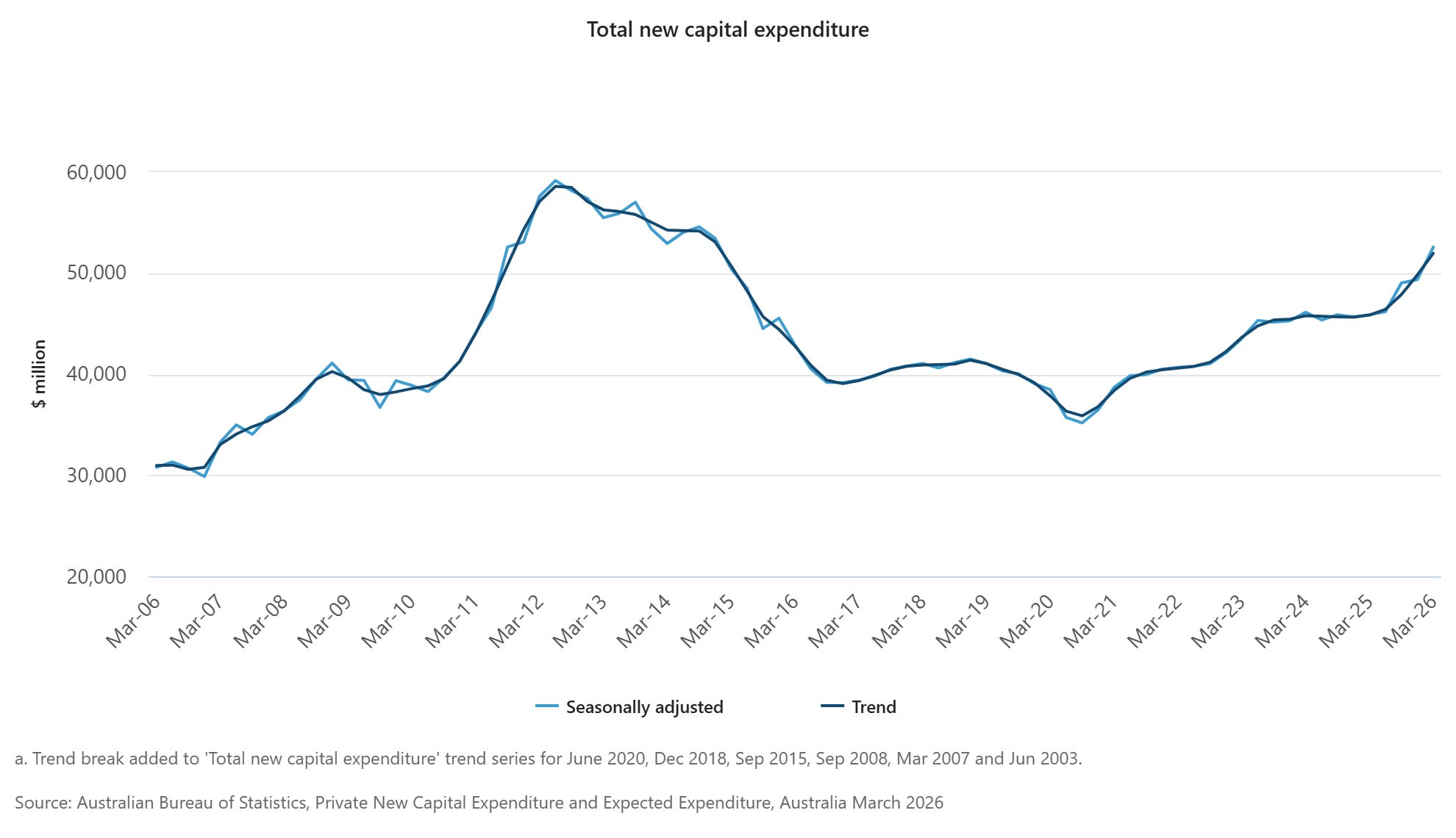
It is true that the Australian capital expenditure data is skewed heavily by mining, but the bulk of labor is employed outside of the minerals industry. Why such low rates of capital formation and why is anybody surprised that we have low productivity?
Here is part of the answer, rising land prices.
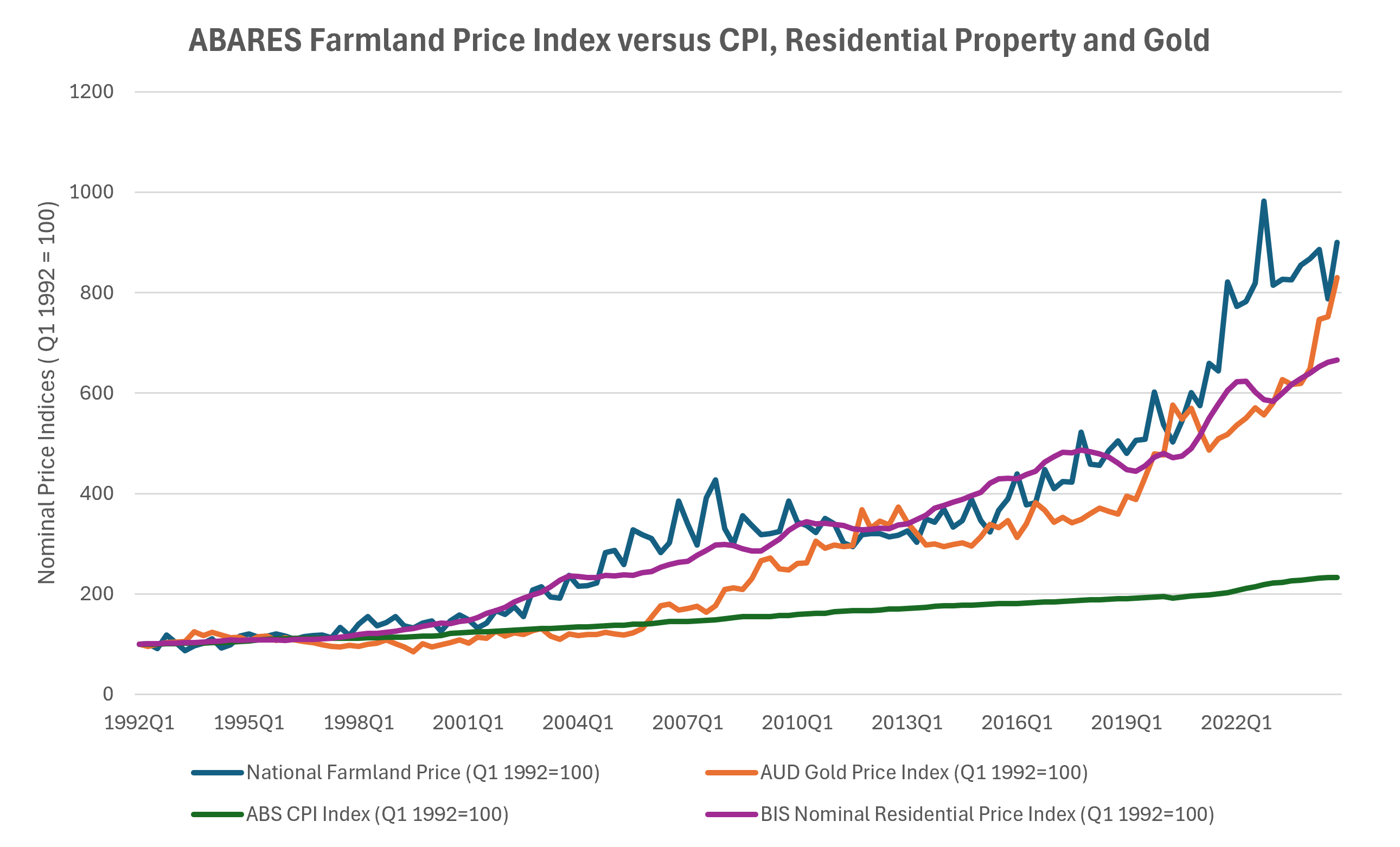
In Australian dollar terms, gold prices started rising significantly after the huge money injection to global markets since the Global Financial Crisis (GFC).
Australia has had a huge credit boom in the last twenty-five years. Not much of that went into new capital stock, outside of mining, land values and real estate absorbed the early flood of newly printed money from too easy financing.
Now rents are soaring and wages will follow.
Australia has been home to the mother of all rentier booms for passive geared real estate speculation. It would have ended, regardless of the tax changes.
Once all the blood has been sucked via rent extraction the economy rolls over.
I do not envy Jim Chalmers job, because this economy was always going to croak no matter what he did, however I do support what he has done before the final croak.
Australia is headed for the mother of all portfolio realignments.
It has started now, and the pace will soon quicken.
The beauty of the Chalmers move is that it came before the teeth of the downturn. For those who understand markets, they have time to adjust and a clear signal.
This is superlative proactive policy from a forward thinking government.
I know many will disagree with that statement, but you are not capitalists.
Capitalists understand there are cycles in business and prepare for them.
Let me finish by reprising what I think is a good path for aspirants.
Target Financial Independence
There is the easy form of such advice.
Get rich quick and retire.
If you can do that, why not?
For most people, this is not helpful advice. They have to work for a living, provision for children, make a home, care for other family members, and save for retirement.
For many, the removal of the 50% CGT discount came as a shock because they are on the top marginal tax rate and feel that capital accumulation potential is limited by it.
I will not lie; the removal of the CGT discount hurts.
However, as I pointed out in The Value of Tax-Deferred Capital Gains, the impact of the tax on after-tax rates of return is mitigated by extending the holding period.
The short version is that when you hold longer there are many PAYG tax years in which there will be no impact on your taxable income from a capital growth strategy. You do pay tax when you sell, but the holding period rate of return is higher the longer that you are able to defer taxable gains. You need no special structure to do this.
The need for tax advice is much lower when you pursue long-term investment.
There are many who benefit from the annual charade of finding new ways to lose some money ahead of the 30-Jun deadline to reduce your tax bill.
Do not sell your winners and there are no losses to find to offset gains.
Some contend that active portfolio management is dead post these changes. This would be true if you had no idea how to run a low turnover investment strategy.
I bought my current Microsoft holdings in 2016 and have been trimming them into strength for about three years now. Those measured gains are offset by any losses that I choose to realize because I invested badly or found a better idea.
This idea that you can only become successful if wages for workers are zero, taxes are nil, your utility is a charity, land is free, and lawyers are slaves locked in a gimp cabinet in the basement, is spurious. If you think that, never try to form a business.
What does affect all business is too much rentier activity.
When the pricing of factors of production is set in favor of passive rent seeking then anybody and everybody who is an entrepreneur will struggle.
Entrepreneurs struggle when the magnitude of rent-seeking is too high.
This is why I welcome the Chalmer’s tax changes. They just slit the throat of many a shameless rent seeker and the gurgles you hear are the death rattle for them.
This does not alter or diminish your problem of entering business.
I have thought for a few weeks, and this is the best idea I have come up with.
Some years ago, the government created tiered tax rates for small businesses:
You have to be less than $50M AUD turnover
You have to have less than 80% of passive income (rents, dividends, capital gains)
If you meet those simple criteria, your tax rate, in the business is 25%.
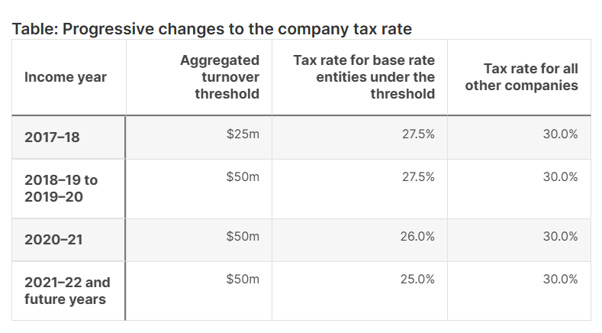
The business sector never had the benefit of the 50% CGT discount. PAYG taxpayers on 48.5% had an effective tax rate of 24.25%. This meant it was better to run your capital account through you PAYG tax and take advantage of the discount.
Now you are being actively encouraged to form a company.
This is not a rort because you need to have at least 20% operating income.
For most young people starting out this is not an onerous hurdle.
Do not even think of starting a company unless you can afford the $5K outgoings a year to operate that at any significant level. more if you need licensing.
The challenge for most young people is to form capital, which means to attain the level of financial independence that enables business activity.
The first hurdle is somewhere to live, eat and sleep.
Due to high housing costs, Australia is a very mean society to the would-be business entrepreneur. You are forced to be a wage slave to afford a roof over your head.
You know already that mathematicians are not worth anything.
This idiot told the world to never let any mathematician profit from their work.
See now, I can walk among you and not wear rags!
I am a mathematician who found out how to make an evil system work for me!
You can too. I am certain of it.
The trick with this small company caper is that you have to find some way to make at least 20% of what you make on your investments from real business activity.
In simple terms:
Make $100K operating revenue for each $400K of investment income.
If you can manage that you qualify for a 25% compounding capital circuit.
Of course, you have to think of a business idea to generate that operating income.
That is your lookout.
I am the mathematician; I prove the theorems.
It is up to you to figure out how to make money from that.
In my case, I already have a good idea.
It is a total winner!
Have fun.